How large is the reduction in energy efficiency caused by scaling heat exchangers?
When hard water is heated, limescale is released and settle as an insulating barrier on components such as heat exchangers. The result is increased energy consumption, higher operating costs, and unnecessary strain on the environment.
But how significant is energy loss, and what does it mean?
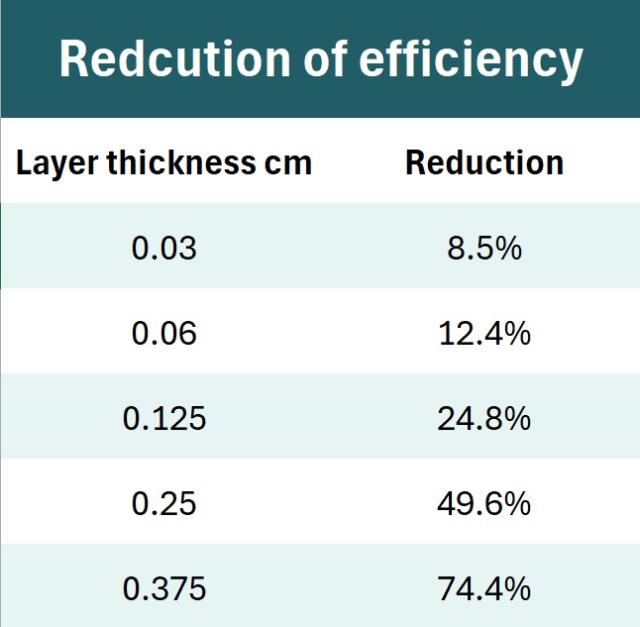
The Danish Technological Institute (DTU) has calculated the consequences of this unnecessary energy loss. According to PhD student Isaac Appelquist Løge, scaling is a much bigger problem than many people imagine. This is supported by calculations from the international organization Association of Water Technologies, which show that a limescale layer of just 3.2 mm can lead to an efficiency loss of 25 percent.
This means that significantly more energy is required to achieve the same heat transfer when heat exchangers are scaled. The figures also show that if the limescale layer is twice as thick, the efficiency loss will double—and so will the additional costs.
Calculations from the Association of Water Technologies
The calculations below show how the efficiency of heat exchangers is affected at different levels of scaling. Several studies exist, including WATERCryst’s own, all pointing in the same direction, with only minor variations in the percentages.
Source: AWT (Association of Water Technologies)