

How much does scaling of heat exchangers reduce energy efficiency?
Energy efficiency is a key factor in both economic and environmental sustainability. Yet it is often impaired by something as simple as limescale. When hard water is heated, minerals are released that form limescale deposits on heating surfaces such as heat exchangers and boilers. This insulating coating inhibits heat transfer and means that the system has to use more energy to achieve the same effect.
Even a thin layer of limescale can have a major impact – energy consumption increases, operating costs increase, and the lifespan of technical installations is shortened. The result is unnecessary resource consumption and increased environmental impact. But how much energy is actually lost, and what does this tell us about the importance of effective limescale prevention in modern operations?
The future of limescale protection
- Saves energy and reduces operating costs
- Extends the life of pipes, boilers and heat exchangers
- Minimizes maintenance and downtime
- Environmentally friendly solution without chemicals or salt
- Preserves the natural composition of drinking water

Do you have problems with limescale
Limescale causes operational disruptions, reduces efficiency and leads to increasing maintenance costs. Hard water can be a hidden expense that slowly squeezes your operating budget if it is not dealt with in time.
Why is limescale a problem?
Limescale deposits reduce heat transfer in hot water tanks and heat exchangers, which quickly increases energy consumption. Did you know that just 1 mm of limescale can increase energy costs by up to 10%? For companies and properties, this can mean significant additional costs and a shorter lifespan for technical installations. Unplanned downtime and frequent repairs quickly become an expensive affair – especially where continuous operation is essential.
Hygiene and water quality – without chemicals
Limescale deposits form a breeding ground for biofilm, which can promote bacterial growth, such as legionella. BIOCAT protects your drinking water system against limescale without the use of salt or chemicals, thus ensuring both energy efficiency and a high standard of hygiene. The systems meet all legal requirements in the Drinking Water Regulation, are certified by DVGW Cert GmbH and tested according to DIN 1988-200 - so you can be confident in quality, safety and documented effect.
BIOCAT - Effective and environmentally friendly limescale protection
Do you want to prevent limescale problems in a sustainable way? BIOCAT uses natural biomineralization, so that the limescale remains in the water, but without forming harmful deposits. This results in fewer operational disruptions, lower energy consumption and less maintenance - all without the use of additives.
Take control of the limescale - contact WATERCryst today
Do you want to avoid unnecessary costs and at the same time protect both installations and drinking water quality? Contact us for a non-binding conversation about how BIOCAT can optimize your operation and ensure clean, hygienic and energy-efficient water all year round.

Maintenance-free for five years
Regardless of water consumption, the systems are maintenance-free for five years, after which the catalyst granulate must be replaced. There is no need for assistance from technicians or service personnel during operation, and there is no need to refill or store operating materials.

Patented catalyst technology
WATERCryst systems are based on our patented catalyst technology, which ensures that the value of the entire drinking water system is maintained and meets technical and normative standards. This applies regardless of the scale of your project - and whether the installation is in single-family homes, housing associations, commercial or public buildings.

Limescale protection with high drinking water quality and energy efficiency
The cost-effective BIOCAT systems are suitable for industry, hotels, residential complexes, and apartment blocks, among others, where they protect installations and technology from limescale damage and ensure high drinking water quality and energy efficiency through natural limescale protection.

Preserving healthy limescale and natural flavor
BIOCAT limescale protection systems are characterized by the fact that they remove the bad properties of limescale from drinking water - while preserving the natural and healthy limescale content. In this way, BIOCAT systems ensure, that drinking water retains its good, natural flavor.

CERTIFICATIONS
The reliable, safe, and durable solution
BIOCAT limescale protection systems are certified by independent institutions and meet high technical standards:
The DVGW certification LS 25-C, KS/KLS 3000 and 4000 to KS 5D guarantees safety, reliability, and quality through comprehensive testing, including functionality and durability.
The ÖVGW certification guarantees drinking water safety with a focus on material selection, hygiene, and quality control.
Read more about our certifications here.
MODE OF OPERATION
Patented catalyst technology - inspired by nature's method
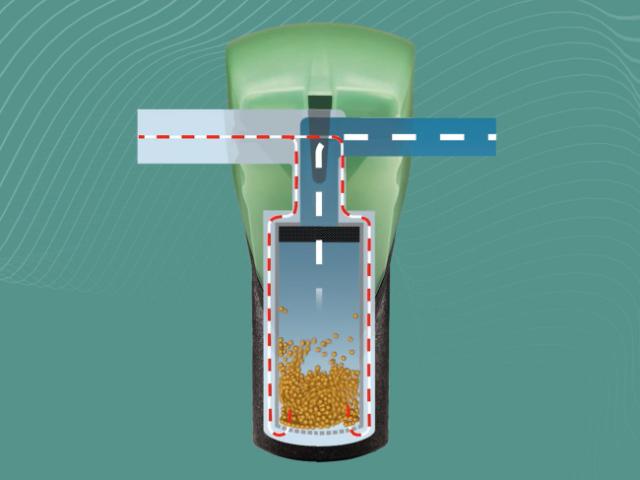
BIOCAT systems work with a patented catalyst technology inspired by biomineralization - nature's way of forming calcium crystals. The technology works via a catalyst granulate that, with its special surface, can form microscopic crystals from the limescale dissolved in the water. These crystals are constantly flushed out with water withdrawals, preventing limescale deposits from forming in drinking water installations, for example.
More than 90.000 systems throughout Europe
CASES
WATERCryst delivers both economically and environmentally sustainable solutions
CAPACITIES
Scalable limescale protection solutions - from single-family homes to industry and housing associations
BIOCAT limescale protection systems are available in various sizes with different capacities. From the smallest systems suitable for single-family homes up to the largest systems that can cover the needs of industry and entire housing associations.
When a large-scale solution is needed for a holiday park with a water park, for example, the systems can be connected in series for virtually infinite capacity - without the need for huge amounts of salt.
-
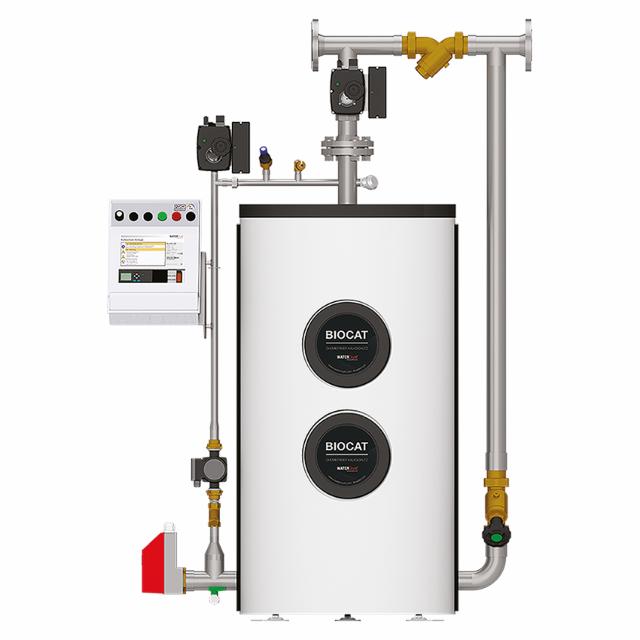
KS SERIES
The right solution for larger projects.
Dim. for 1.136 housing units, 2.500 pers., 250.000 l/d -
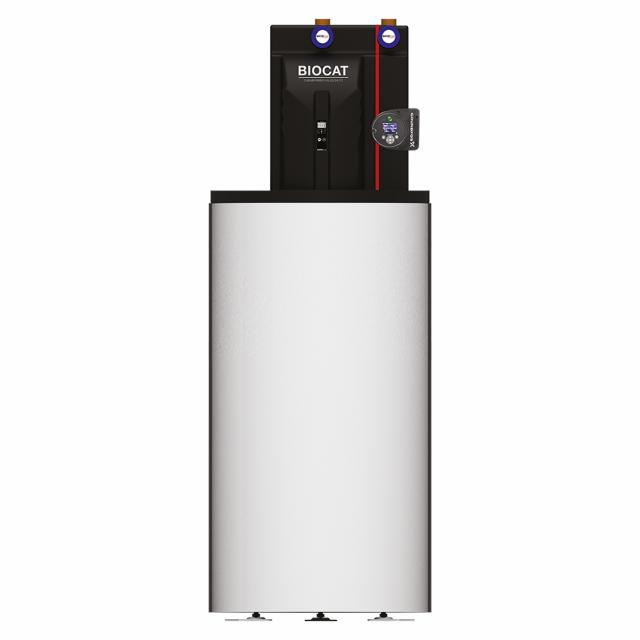
WS SERIES
Perfect protection for high-capacity hot water tanks.
Dim. for 240 homes, 840 pers., 25.571 l/d -
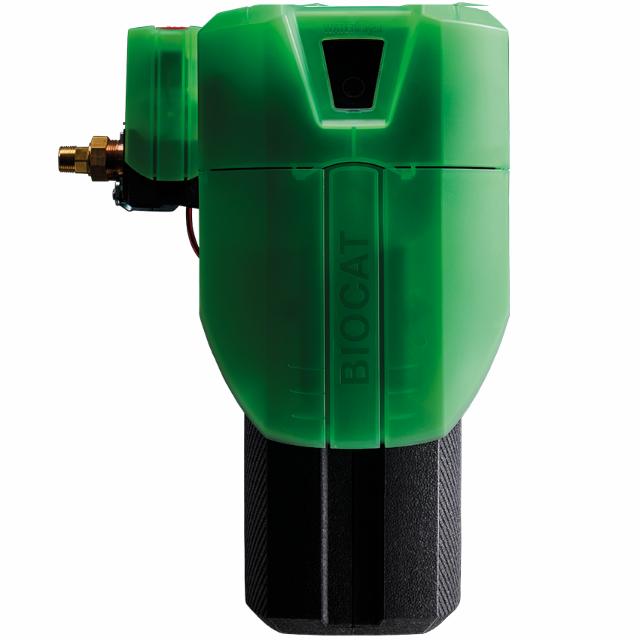
KLS-SERIES
State-of-the-art limescale protection solution with leak detection, smart control and optimized installation system.
Dim. for 3 housing units, 8 pers., 750 l/d -
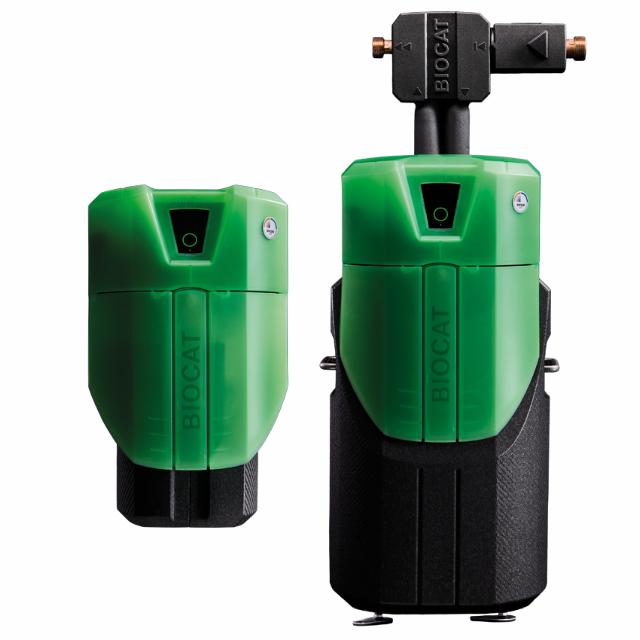
KS-SERIES
Standard for small and medium-sized systems
Dim. for 17 housing units, 38 pers., 3.750 l/d
When a large-scale solution is needed, for example for a holiday park with a water park, the systems can be connected in series and thus have a virtually infinite capacity - without using enormous amounts of salt.

Hardness is defined as the total dissolved calcium and magnesium content of the water - and is dependent on the type of water in the subsoil where each waterworks extracts water.
In general, the water is hardest on Zealand, Falster, Lolland, Møn and Funen. Jutland has the most soft and medium-hard water, but there are also areas where the water is hard in the western part of Denmark.
High calcium content in the water can lead to calcified pipes, frequent repairs to household appliances, extra cleaning and higher heating bills.
Biomineralization is the process by which living organisms produce their inorganic components such as shells, tooth enamel and bones. Several biominerals are known, of which calcium carbonate (CaCO3) is the most common. It is found in seashells - and is one of the building blocks of the patented WATERCryst catalyst technology.
A 550-million-year-old method
Fossil evidence shows that organisms that use biomineralization to form skeletons, for example, have existed in the oceans for at least 550 million years. In other words: BIOCAT plants utilize a highly proven and successful process.
Taste is subjective, but the calcium in drinking water helps to give it a natural flavour. When cooking or brewing coffee, the minerals in the lime are also essential flavour carriers. Many people believe that removing the lime gives the water a soapy or flat flavor.
A "lime thermal barrier" is an insulating layer of lime on heat exchangers and pipes. The layer is formed by highly calcareous water. The "lime heat barrier" inhibits the heat transfer from the heat exchanger to the drinking water. This creates additional costs due to higher electricity demand, faster wear, and tear, etc.
Calcium, which is primarily made up of minerals such as calcium carbonate, is especially important for building teeth and bones. Calcium is also important for a number of other bodily processes, and it's a good idea to include calcium-rich foods in your diet and maintain calcium in your drinking water.
To avoid legionella growth in drinking water installations, make sure that the temperature in the hot water tank and/or drinking water tank is always kept at 60°C or higher. Effective limescale protection is essential for this to be possible.
BIOCAT lime protection systems require no maintenance. Every five years, the granulate in the system must be replaced. This is done by an authorized plumber. No salt or other chemicals and operating materials should be added to the system.
When lime changes its properties, it means that the lime loses its ability to adhere to surfaces and form deposits.
You can't avoid cleaning altogether - but BIOCAT makes it easier. When calcareous drinking water evaporates, minerals are always left behind, partly in the form of annoying stains. Clean and maintain your surfaces regularly and avoid white spots by wiping away water droplets before the water evaporates. Avoid using microfiber cloths, steel sponges and harsh abrasives that can roughen the surface coating.
If there are limescale stains due to evaporation, use a gentle, natural household cleaner such as lemon essence.
BIOCAT systems are chemical-free because the process in a BIOCAT system works without the addition of salt and phosphates.
The great advantage of chemical-free water treatment is that the wastewater from a BIOCAT system is completely clean drinking water - a BIOCAT system does not release any harmful substances into the environment. A side benefit of chemical-free water treatment is that much less rinse water is required than with other water treatment methods.